What Is pabington?
pabington is a term that is being searched online, but it does not have one fixed meaning. It is not widely known as an official place, famous person, registered global company, or standard dictionary word. Instead, it appears to be a flexible name-style term used in different ways across online content, creative writing, usernames, and small branding ideas.
The word has a structure that sounds familiar. It looks like it could be a place name, a surname, or the name of a fictional town. That familiar sound is one reason people notice it. At the same time, because there is no clear public definition, many people search it to understand what it means.
A realistic introduction to pabington should begin with this point: the term is open to interpretation. It should not be presented as a proven city, historic location, or major brand unless strong evidence supports that claim. At the moment, it is safer to describe it as a rare and adaptable term with growing online interest.
Why pabington Gets Attention
The attention around pabington is mostly linked to curiosity. People often search unfamiliar words after seeing them in an article title, social media post, profile name, or online discussion. When a word looks meaningful but has no clear explanation, search interest can grow quickly.
pabington also works well because it is easy to read and pronounce. It has a name-like quality, which makes it useful for people who want a clean online identity. In digital spaces, simple and unused names are valuable. Many common usernames and brand names are already taken, so unusual words can become attractive.
Another reason for its interest is its possible use in creative work. Writers, bloggers, designers, and online creators often need words that sound real but are not tied to a specific public identity. pabington can fill that role because it feels believable without carrying a heavy background.
Possible Meaning and Background
There is no confirmed single origin for pabington. It may be a rare surname, a creative spelling, a made-up place name, or a modern internet term. Some surname records suggest that Pabington has appeared in family history data, but that does not make it a common or widely recognised name.
The ending “-ington” is often seen in English place names and surnames. This gives the word an old settlement-like sound. Many readers may assume pabington is a village or local area because of this ending. That assumption is understandable, but it should not be treated as fact without reliable records.
The word may also be confused with similar names such as Paddington, Babington, Abington, or Partington. These names have clearer historical or geographic connections. pabington, however, remains much less established in public information.
Is pabington a Real Place?
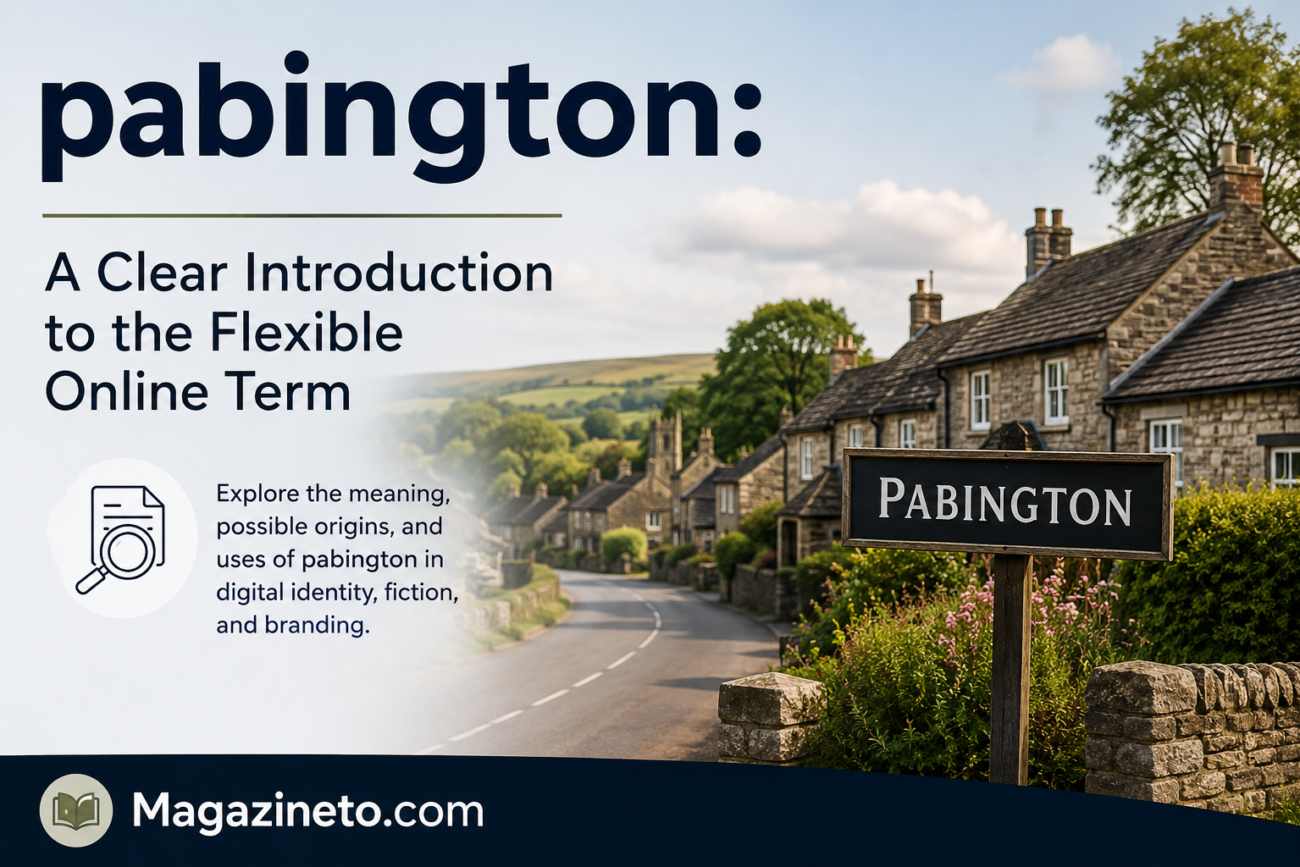
At present, pabington should not be described as a verified real-world town unless proper records are available. Some online articles may present it as a quiet village, a travel destination, or a hidden location, but many of those descriptions appear to be creative rather than official.
This distinction matters. A blog post can discuss pabington as a fictional or symbolic place, but it should not claim exact population numbers, landmarks, government status, or travel facts without sources. Readers expect accuracy, especially when an article uses a journalistic tone.
The safest way to write about pabington as a place is to call it a place-like term or a fictional setting. That allows the word to be explored honestly without misleading the reader.
pabington as a Fictional Setting
One of the strongest uses of pabington is as a fictional place name. It could work in a novel, short story, game, comic, or online series. The name sounds like a small town, a village, or a quiet district. It gives writers a ready-made setting without forcing them to use a real location.
A fictional pabington could be shaped in many ways. It could be a rural community, an old market town, a suburb, or a symbolic place in a personal story. Because the name is neutral, it gives the writer room to build their own details.
This is useful for creators who want a setting that feels familiar but remains original. Real places come with real histories, cultures, and expectations. A fictional name gives more freedom while still sounding natural to readers.
pabington as a Digital Identity
pabington can also be used as a digital identity. In online spaces, a unique name can help a person or project stand out. The word is short enough to remember and distinct enough to avoid sounding generic.
It could be used for a blog, a creative studio, a gaming profile, a podcast, a community page, or a small online project. Since the term does not have a strong existing meaning, users can build their own identity around it.
However, anyone planning to use pabington for branding should still check availability. A rare term can still be used by someone else. Before using it for a website, social account, product, or business, it is important to check domain names, trademarks, social handles, and existing search results.
pabington in Branding
From a branding point of view, pabington has both strengths and limits. Its main strength is flexibility. It does not restrict a brand to one industry. It could fit a design studio, clothing idea, media page, writing project, or creative service.
The name also has a calm and balanced sound. It is not too long, not too complex, and not difficult to say. That makes it easier for people to remember.
The main weakness is that it does not explain what the brand does. A name like pabington would need a clear tagline or description. For example, “Pabington Studio” sounds professional, but people would still need to know whether it offers design, photography, publishing, or another service.
This is common with invented or rare brand names. They can become strong, but they need consistent use and clear messaging.
How Bloggers Should Write About pabington
Bloggers should approach pabington with care. Since the word does not have a clear public definition, the article should avoid unsupported claims. It is better to explain what is known, what is uncertain, and how the term is being used.
A good article should not pretend that pabington has a long verified history if that history is not available. It should also avoid creating fake travel details, fake cultural facts, or invented statistics. That may attract clicks in the short term, but it can damage trust.
The better approach is simple: present pabington as a rare, flexible, and searchable term. Explain its possible uses, its name-like structure, and why people may find it interesting.
Why the Term Feels Useful
pabington feels useful because it sits between familiar and unknown. It looks like a real name, but it is not heavily defined. This makes it suitable for people who want a word they can shape.
In online culture, this matters. Many digital names become popular not because they have old meanings, but because people use them in new ways. A word can begin as a username, a fictional setting, or a content idea, then gain attention as others search and reuse it.
pabington fits this pattern. Its value comes from its openness. It can mean different things depending on the project, but it still sounds stable enough to be remembered.
Conclusion
pabington is best understood as a rare and flexible term rather than a word with one confirmed meaning. It may have some surname background, but most current interest appears to come from online curiosity, creative use, and its potential as a name-style identity.
It can work as a fictional place, a digital username, a blog topic, or a brand idea. Its strength is that it sounds familiar without being overused. Its weakness is that it needs explanation because readers may not know what it means.
A straight and accurate article about pabington should not overclaim. It should focus on what the term appears to be: a searchable, adaptable word that people can use in creative and digital contexts. That honest framing makes the topic clearer and more useful for readers.
