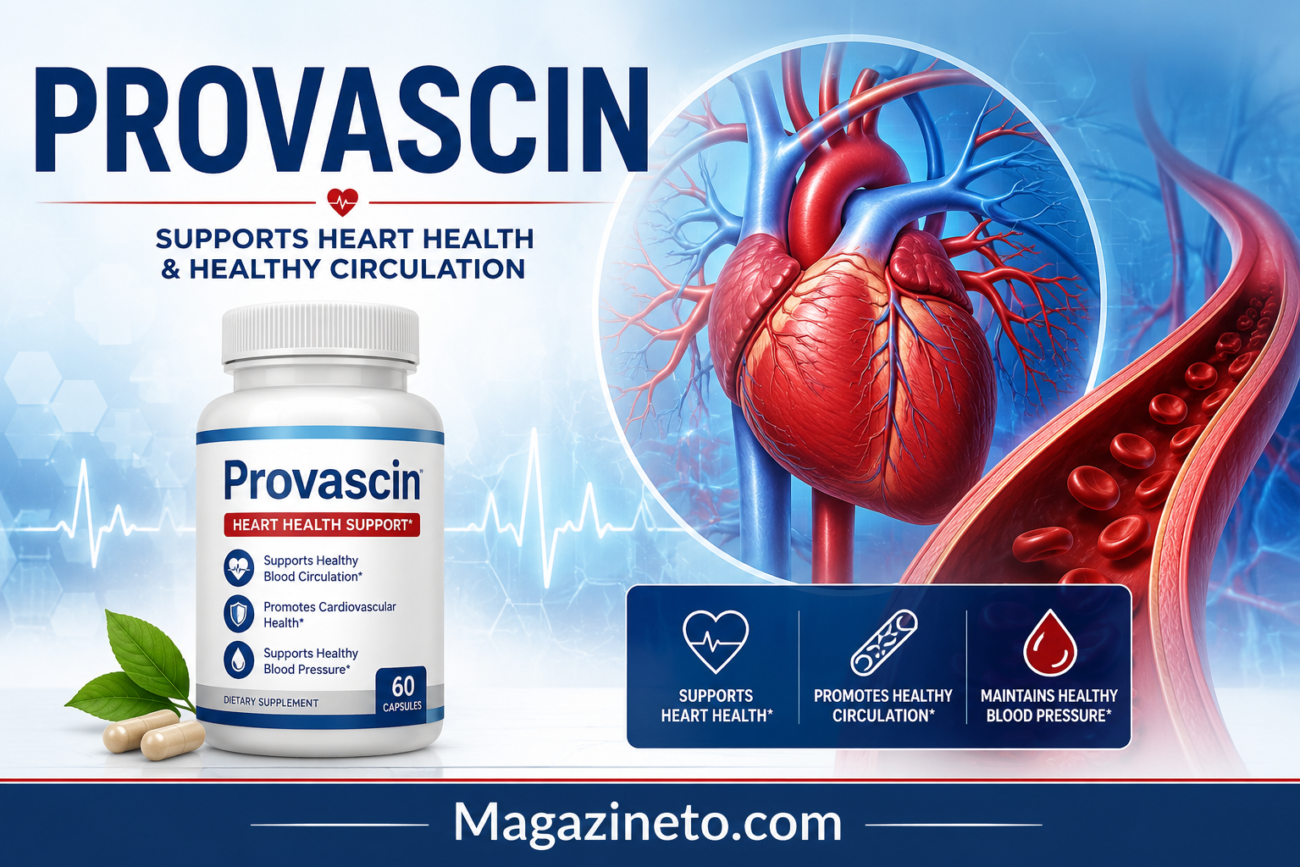
Introduction to Provascin
Provascin is a dietary supplement commonly discussed in connection with heart health, blood circulation, energy support, and vascular wellness. It is usually marketed toward adults who want to support cardiovascular function through nutrition-based ingredients rather than relying only on general lifestyle advice. Like many wellness products, Provascin sits in a space where consumer interest is high, but careful reading is important.
The name can create confusion because it sounds similar to some medical products and cardiovascular terms. However, Provascin should be understood as a supplement, not a prescription treatment for heart disease, high blood pressure, blocked arteries, or any diagnosed medical condition. This distinction matters. A supplement may support normal body functions, but it should not be viewed as a replacement for medical care, prescribed medicine, blood pressure monitoring, or professional diagnosis.
This article gives a straightforward introduction to Provascin, what it is usually promoted for, what types of ingredients are often associated with it, how consumers should think about its claims, and what safety points should be considered before use.
What Is Provascin?
Provascin is generally described as a cardiovascular support supplement. It is designed for people interested in maintaining healthy circulation, vascular function, and overall heart wellness as part of a broader health routine. The product is often connected with ingredients that are used in the supplement market for energy metabolism, antioxidant support, and normal cardiovascular function.
The key point is that Provascin is not presented here as a cure or treatment. It belongs to the category of wellness supplements. That means its role, if used, should be supportive rather than therapeutic. A person with high blood pressure, chest pain, heart disease, diabetes, circulation problems, or a history of stroke should not rely on a supplement without medical advice.
Many people turn to products like Provascin because heart health is a long-term concern. Blood pressure, cholesterol, body weight, activity level, smoking, stress, sleep, and diet all influence cardiovascular risk. A supplement may become part of a routine, but it cannot replace these core factors.
Why People Search for Provascin
Interest in Provascin usually comes from three areas: circulation, heart support, and energy. Some consumers look for it because they feel tired, have cold hands or feet, or want nutritional support for blood flow. Others may be looking for a heart-focused supplement that includes nutrients commonly linked with cardiovascular wellness.
There is also a growing consumer trend toward supplement products that combine several ingredients in one formula. Instead of buying separate products, some people prefer a blend that claims to address multiple aspects of wellness. Provascin appears to fit that type of demand.
However, consumer interest does not automatically prove effectiveness. A responsible approach is to look at the product label, the ingredient amounts, the manufacturer’s claims, and the available evidence for the individual ingredients. It is also useful to ask whether the product has been tested as a complete formula, because evidence for one ingredient does not always prove the same result for a combined supplement.
Common Ingredient Focus
Provascin is often associated with ingredients used in cardiovascular and metabolic support formulas. These may include nutrients or compounds linked with cellular energy, antioxidant activity, and normal blood vessel function.
CoQ10
Coenzyme Q10, often called CoQ10, is a compound involved in cellular energy production. It is commonly used in heart health supplements because the heart requires constant energy to function. Some people taking cholesterol-lowering medicines also ask about CoQ10 because those medicines may affect CoQ10 levels, although medical guidance should always come from a clinician.
In a supplement like Provascin, CoQ10 is usually positioned as an energy and cardiovascular support ingredient. It should not be treated as a quick solution for heart symptoms.
L-Carnitine
L-carnitine is an amino acid-like compound involved in the movement of fatty acids into cells for energy production. It is often discussed in relation to muscle function, exercise performance, and heart energy metabolism.
Its inclusion in cardiovascular supplements is linked to the idea that the heart and muscles need efficient energy use. Still, the value of L-carnitine depends on dose, individual health status, diet, and other factors.
Chaga and Antioxidant Support
Chaga is a fungus used in some wellness products for antioxidant support. Antioxidants are commonly included in supplements because oxidative stress is connected with aging and general cellular damage. In marketing language, this can sometimes be overstated, so consumers should be careful.
Antioxidant support does not mean a product can reverse disease. It simply means the ingredient may contribute to the body’s normal defense systems.
Betaine and Metabolic Health
Betaine is another compound sometimes included in wellness formulas. It is often discussed in relation to methylation, homocysteine metabolism, and general metabolic function. These are technical areas, but the practical point is simple: betaine is usually included to support normal biochemical processes in the body.
Again, this does not mean Provascin can treat a medical condition. It means the formula may be designed around nutrients involved in heart and metabolic pathways.
How Provascin Is Usually Used
Provascin is usually taken as a capsule supplement, often with meals. The exact serving size depends on the product label, and users should follow the manufacturer’s instructions unless a healthcare professional gives different advice.
Taking supplements with food may reduce stomach discomfort for some people. It may also help build a consistent routine. However, consistency should not be confused with guaranteed results. Supplements vary in how people respond to them.
A person considering Provascin should first review all current medicines and health conditions. This is especially important for anyone taking blood pressure medicine, blood thinners, diabetes medication, cholesterol medication, or heart medication.
Safety Considerations
The most important safety point is that Provascin should not be used as a substitute for medical treatment. Cardiovascular symptoms can be serious. Chest pain, shortness of breath, sudden weakness, fainting, severe headache, or one-sided numbness require urgent medical attention.
Even natural ingredients can interact with medicines or cause unwanted effects. Possible issues with supplement use may include stomach discomfort, nausea, headache, dizziness, or changes in how a person feels after starting a new product. People with allergies should also check the label carefully.
Pregnant or breastfeeding women, older adults, people with chronic illness, and anyone scheduled for surgery should speak with a healthcare professional before using Provascin. This is not because the product is automatically unsafe, but because personal health context matters.
What Provascin Can and Cannot Do
Provascin may be considered by adults who want nutritional support for heart and circulation wellness. It may fit into a broader routine that includes a balanced diet, regular exercise, weight management, sleep, hydration, and regular health checks.
What it cannot do is replace proven medical care. It should not be expected to cure hypertension, remove artery plaque, treat heart failure, prevent stroke, or reverse poor lifestyle habits. Any article or advertisement that suggests a supplement can deliver those results should be approached carefully.
Provascin may be relevant as a supplement option, but its value depends on the person using it, the quality of the formula, the dose, and whether it is used responsibly.
Buying and Label Checks
Before buying Provascin, consumers should check the label for the full ingredient list, serving size, warnings, expiry date, and manufacturer information. It is also useful to buy from a trusted seller rather than an unknown website.
Look for clear labeling. Avoid products that make extreme claims, promise fast medical results, or use fear-based marketing. Serious supplement companies usually describe support for normal body functions rather than claiming to cure disease.
Consumers should also compare the ingredient amounts with what is listed on the bottle. A product may contain familiar ingredients, but the actual dose matters. Low amounts may not offer the same level of support suggested by general ingredient research.
Final Thoughts on Provascin
Provascin is best understood as a cardiovascular wellness supplement designed to support heart-related nutrition, circulation, and general vascular health. It appeals to people who want a structured supplement option as part of a health routine.
The most responsible way to approach Provascin is with realistic expectations. It may support normal wellness, but it is not a medical treatment. People with heart concerns, high blood pressure, circulation problems, or ongoing medication use should speak with a healthcare professional before taking it.
In simple terms, Provascin may have a place in a health plan, but it should never be the whole plan. Heart health still depends on daily habits, regular checkups, medical guidance when needed, and careful attention to warning signs. A supplement can support the body, but informed decisions protect the person using it.
